When Should Drywall Be Replaced in Your Home?
A small dent from moving furniture is usually a simple repair. A soft wall beneath a window, a brown stain spreading across the ceiling, or cracks that keep coming back are different matters. The question, “when should drywall be replaced?” is less about making walls look new and more about identifying moisture, movement, or material failure before it affects the rest of your home.
Drywall is designed to create a clean, finished surface over framing, insulation, wiring, and plumbing. It can handle ordinary wear for many years, but it cannot recover from every type of damage. Knowing the difference between a repairable surface flaw and a wall that needs replacement helps homeowners protect their comfort, safety, and long-term property value.
When Should Drywall Be Replaced Instead of Repaired?
Replacement is usually the better choice when drywall has lost its strength, absorbed significant moisture, developed widespread mold growth, or shows damage connected to an unresolved issue behind the wall. Patching may improve the appearance temporarily, but it will not correct weakened gypsum, warped paper facing, or damage that continues to spread.
A qualified contractor should also look beyond the visible area. The cause of the damage matters as much as the damage itself. A ceiling stain may come from a roof leak, an upstairs plumbing leak, condensation in an attic, or a failed bathroom exhaust system. Replacing drywall before the source is corrected only sets the stage for the same problem to return.
In many cases, a targeted section can be removed and replaced without rebuilding an entire room. The right scope depends on how far the damage extends, whether insulation or framing has been affected, and whether a clean, durable finish can be achieved at the repair boundaries.
Water Damage That Has Compromised the Board
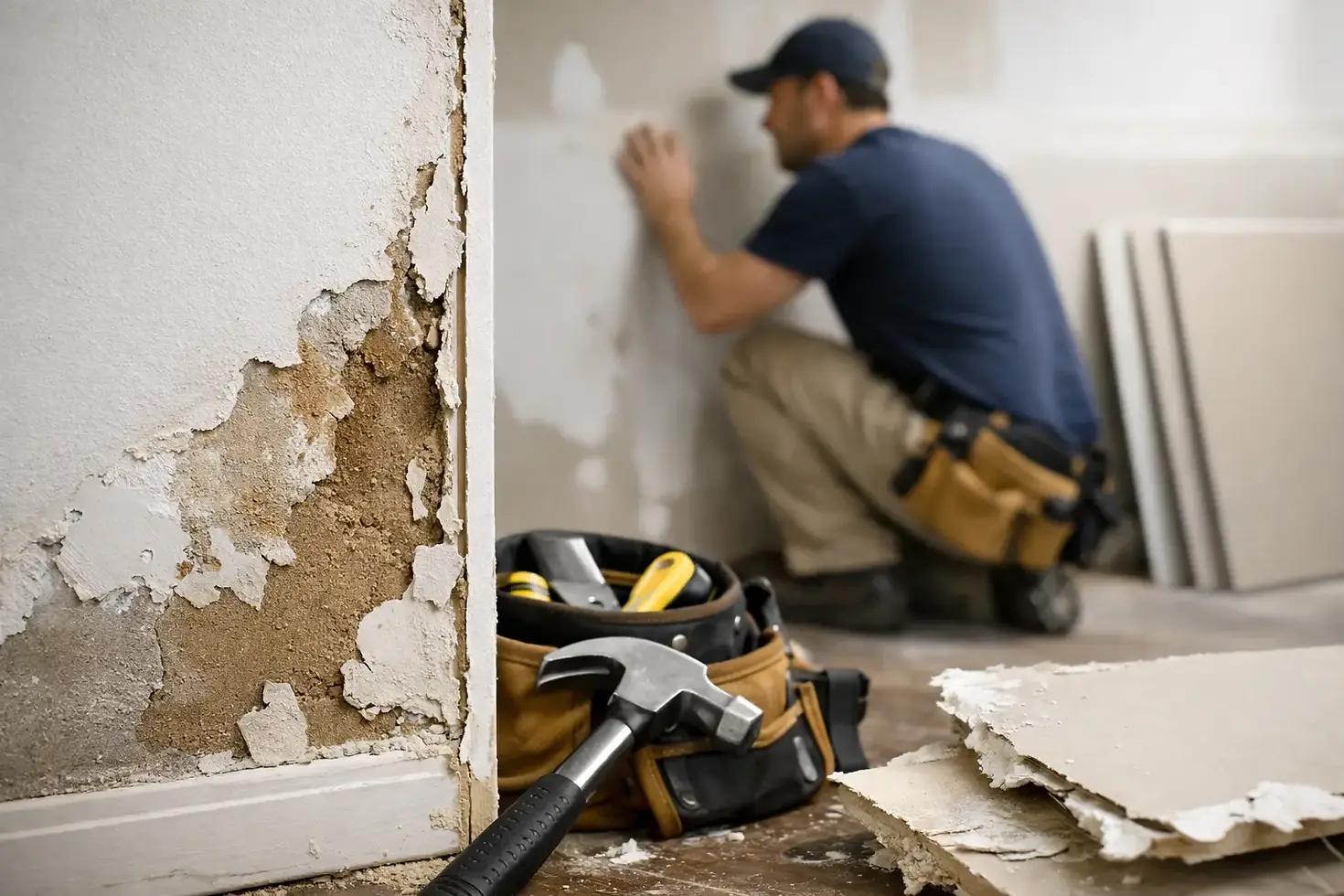
Water is one of the clearest reasons to replace drywall. Drywall contains gypsum pressed between paper layers. Once it becomes thoroughly wet, it can soften, swell, sag, crumble, or separate from its fasteners. Even after it dries, the board may no longer be structurally sound or suitable for a lasting finish.
Watch for staining, bubbling paint, peeling texture, swollen baseboards, soft spots, or a ceiling that appears to sag. A musty odor can also point to moisture trapped in a wall cavity. A small, isolated stain from a leak that was repaired quickly may only require stain blocking and a localized repair. However, if the drywall feels soft, has changed shape, or was wet for an extended period, replacement is generally the responsible option.
Ceilings deserve prompt attention. Water-damaged ceiling drywall can become heavy and pull away from framing, creating a safety concern. If a ceiling is bowing, cracking around fasteners, or feels soft, keep people clear of the area and arrange for an inspection.
Mold Growth and Ongoing Moisture Problems
Surface mold on a nonporous material can sometimes be cleaned after the moisture source is eliminated. Drywall is different because its paper facing can support mold growth and its core can hold moisture. If mold is widespread, returns after cleaning, or appears alongside soft or stained drywall, removal of affected material is often necessary.
The visible patch is not always the full extent of the issue. Mold can grow behind baseboards, under insulation, or on the back side of drywall where a slow leak has gone unnoticed. Proper work involves locating the source, containing the work area when needed, removing damaged material, drying the cavity, and checking framing and insulation before installing new board.
Bathrooms, laundry rooms, basements, and exterior walls are common trouble spots because they experience more humidity or are more exposed to plumbing and condensation. Good ventilation and prompt leak repair are just as important as the drywall work itself.
Cracks That Point to Structural Movement
Not every crack means a wall needs to be replaced. Fine hairline cracks near doors, windows, or ceiling joints can happen as a home settles through seasonal temperature and humidity changes. These are often repairable with proper preparation, tape, joint compound, and repainting.
Replacement becomes more likely when cracks are extensive, repeatedly reopen after repair, run with noticeable displacement, or occur with other signs of movement. Doors that suddenly stick, floors that slope, gaps around trim, and cracks that travel across multiple surfaces all warrant a closer look. Drywall cannot solve a framing, foundation, or roof-structure issue. The underlying movement needs to be understood first.
In older homes, previous repairs may also reveal poor workmanship beneath the surface. Loose tape, thick layers of compound, or poorly supported patches can make a wall look uneven and continue to crack. Removing and rebuilding a damaged section may provide a cleaner, more dependable result than repeatedly covering the same failure.
Holes, Impact Damage, and Deteriorated Surfaces
Small nail holes, screw holes, and minor dents are normal maintenance items. A clean patch is usually all that is needed. Larger holes can also be repaired successfully if the surrounding drywall is firm and the patch can be properly supported.
Replacement is worth considering when there are multiple large holes, crushed drywall, extensive gouges, or damage spread across a broad area. A wall with years of patches may be technically repairable, but it can be difficult to make it truly flat and consistent under fresh paint. In a high-visibility room, replacing a larger section can produce a better finish and reduce the time spent chasing old repairs.
Damage near corners, doors, and busy hallways may also indicate a need for stronger finishing details. Corner bead, durable trim, and properly installed backing help protect these vulnerable areas after the new drywall is installed.
Signs the Problem Is Behind the Wall
Drywall often gives the first warning that something is happening out of sight. Stains, localized bulges, recurring nail pops, or unexplained dampness can point to leaking pipes, damaged flashing, inadequate insulation, pest activity, or framing concerns.
Before replacement begins, the wall cavity should be inspected where practical. This is the time to correct a leaking pipe, improve insulation, add blocking for future fixtures, or address damaged framing. It is much easier and less costly to complete these repairs while the wall is open than after a new finish has been painted.
Homeowners planning a renovation can use this opportunity to make useful upgrades. Adding sound insulation around bedrooms, reinforcing walls for grab bars, or preparing for wall-mounted shelving are practical improvements that can be completed before new drywall goes up.
Repair or Replacement: Choosing the Right Scope
The decision is rarely all or nothing. A professional assessment should consider the cause, the size of the affected area, the condition of surrounding drywall, and the finish expected in the room. Localized replacement is often the most cost-effective choice for a contained problem. Full-room replacement may make more sense after a major leak, widespread deterioration, or extensive remodeling work.
A good repair should blend into the surrounding wall, not simply cover the damaged spot. That requires sound backing, correctly sized replacement board, taped seams, multiple coats of joint compound, careful sanding, matching texture where needed, and proper priming. Skipping steps can leave visible seams, flashing under paint, or cracks that return within a season.
If the home was built or remodeled decades ago, take care before sanding or demolishing older textured finishes or joint compounds. Materials from some periods may require testing before they are disturbed. This is a sensible precaution for protecting everyone in the home and ensuring the work is completed properly.
Do Not Wait for Damage to Spread
Drywall replacement is not always a large renovation project, but delaying a known problem can make it one. Water can reach insulation and framing. Mold can spread beyond the visible area. A loose ceiling section can become a hazard. Addressing the cause early gives you more options and usually keeps the repair more contained.
With 30+ years of hands-on trade experience, a Red Seal carpenter understands that a smooth wall is only the final layer of a good repair. The real value comes from finding the cause, rebuilding the damaged area correctly, and leaving your home with a finish that is made to last.
If you are unsure whether a damaged wall can be repaired or should be replaced, start with a careful inspection rather than a quick patch. The right solution should restore both the appearance of the room and your confidence in what is behind the wall.


Comments