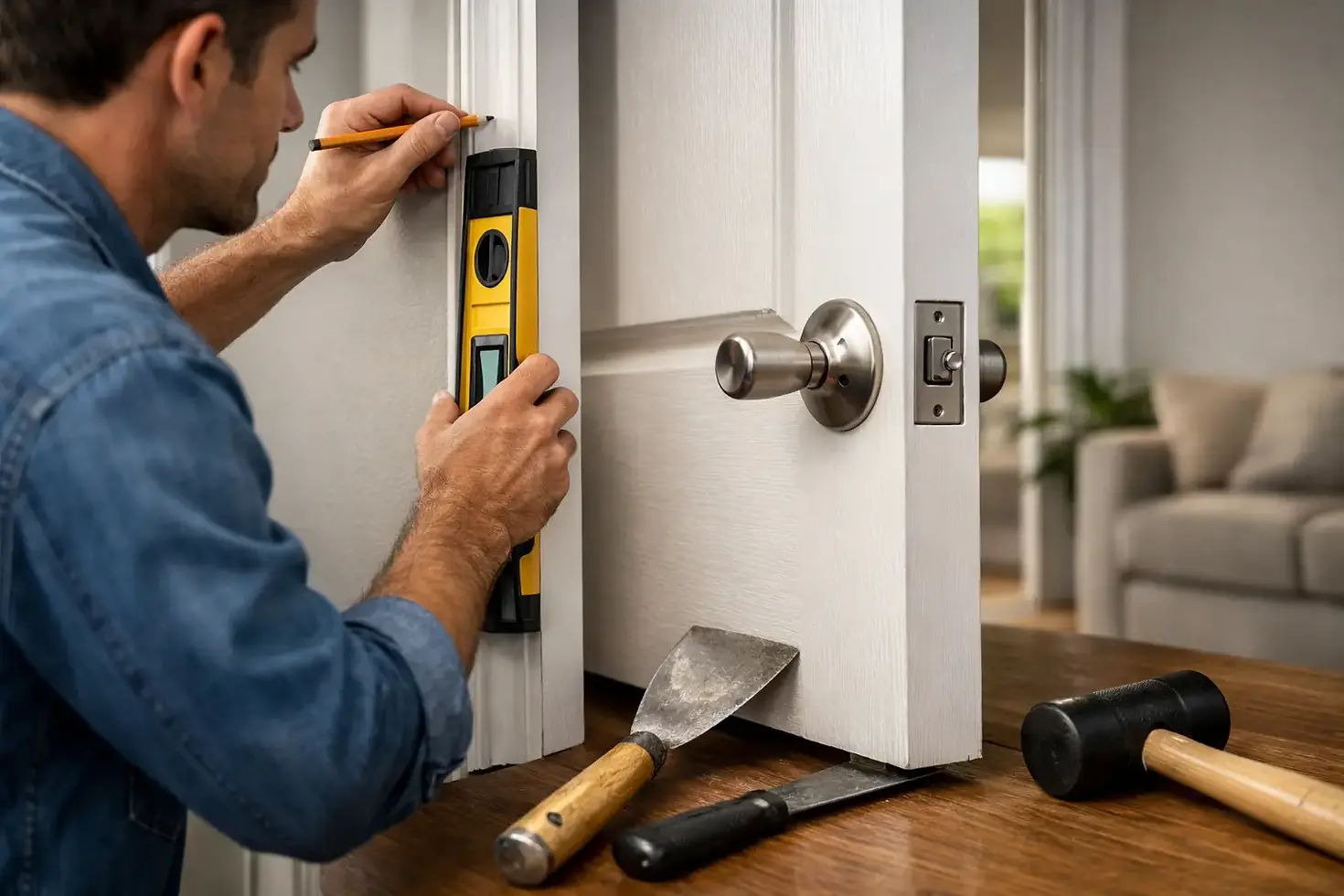
How to Repair Sticking Doors Without Guesswork
A door that drags across the floor, catches at the jamb, or needs a shoulder push to latch is more than a daily annoyance. It can scuff flooring, strain hinges, damage trim, and signal movement or moisture issues in the home. Knowing how to repair sticking doors starts with identifying exactly where the door is binding. The right repair may be as simple as tightening screws, but trimming a door before checking the hinges can create a gap that never looks right.
A careful diagnosis protects the fit and finish of the door. That is the same workmanship-first approach a skilled carpenter brings to every repair: correct the cause, make the smallest effective adjustment, and leave the door operating properly for the long term.
Find Where the Door Is Sticking First
Close the door slowly and watch the gap, or reveal, between the door and frame. A consistent gap around the top and sides usually points to a latch or strike plate problem. A gap that narrows at one corner points more often to loose hinges, a shifted jamb, or seasonal movement.
Look for rub marks on the door edge, jamb, threshold, or floor. If they are not obvious, place a strip of painter's tape along the suspected contact area or lightly mark the door edge with chalk. Open and close the door a few times. The transferred mark will show where material is actually contacting.
Pay attention to when the problem began. A door that sticks only during humid weather may be swelling from moisture. One that gradually began dragging over several months may have loose hinge screws or minor building movement. A door that suddenly will not close after a renovation, new flooring installation, or foundation repair deserves a closer look at the frame and surrounding structure.
Start With the Hinges and Fasteners
Loose hinges are among the most common reasons doors stick, particularly on heavy solid-core exterior doors and frequently used bedroom or bathroom doors. Open the door and check each hinge for movement. Tighten every screw in both the door and the jamb, using a hand screwdriver when possible. Power drivers can strip old screw holes quickly if used too aggressively.
If a screw spins without tightening, the hole has worn out. Remove the screw and fill the hole with wood glue and snug-fitting wood splinters or dowels. Once the glue has cured, trim the filler flush, drill a small pilot hole, and reinstall the screw. For the top hinge on a heavy door, replacing one short jamb screw with a 3-inch screw can provide a much stronger hold by reaching the wall framing behind the jamb.
This repair is often enough to lift a sagging door back into position. Check the swing before making any further changes. If the door now clears the jamb and latches smoothly, there is no reason to plane or sand the edge.
Check for Bent or Worn Hinges
Hinges can wear, bend, or become packed with old paint. A door that appears level but still binds around one hinge may need hinge replacement rather than adjustment. Remove and replace one hinge at a time so the door remains supported and aligned.
Choose a hinge that matches the existing size, corner profile, and finish. A slightly different hinge thickness or leaf shape can change the door position in the jamb. On older homes, painted-over hinges may also be hiding cracks or separated hinge leaves that are affecting the door's swing.
Adjust the Strike Plate When the Door Closes but Will Not Latch
Sometimes the door does not stick along its edge at all. It closes into the frame, but the latch hits the strike plate too high, too low, or too far to one side. Look for a fresh scrape on the strike plate or put a small amount of lipstick, chalk, or painter's tape on the latch to mark its contact point.
If the latch is only slightly misaligned, loosen the strike plate screws and reposition it within the existing screw holes. You may need to enlarge the opening in the jamb with a file or chisel so the latch enters fully. Make small adjustments, test the door repeatedly, and avoid enlarging the opening more than necessary.
A door that needs to be pulled tightly to latch may be pressing too hard against the weatherstripping or strike plate. This is common with exterior doors in colder climates. A tight seal is valuable, but excessive pressure makes everyday use difficult and can wear out the hardware. Adjusting the strike plate slightly outward may solve the issue without compromising the door seal.
How to Repair Sticking Doors Caused by Swelling
Wood doors respond to humidity. Bathrooms, laundry rooms, kitchens, and entry doors are especially vulnerable because of moisture and temperature changes. If the sticking comes and goes with the seasons, inspect the paint and finish along all six sides of the door, including the top and bottom edges.
Bare or poorly sealed wood absorbs moisture, expands, and presses against the jamb. Improving ventilation, repairing a nearby leak, and keeping indoor humidity at a reasonable level can prevent the problem from returning. For an exterior door, check that weather protection, caulking, and drainage around the opening are doing their job.
If the door is consistently binding after the humidity issue has been addressed, remove it and carefully plane or sand only the marked contact area. Take off a small amount of material at a time. A carpenter's plane creates a cleaner, more controlled result than aggressive sanding, especially on a solid wood door.
After trimming, seal the freshly exposed wood with primer and paint or a compatible clear finish. Skipping this step invites the same moisture-related problem to return. On painted doors, feather the repair into the surrounding edge so it looks intentional once refinished.
Address a Door That Rubs the Floor
A door rubbing the floor may have dropped because of loose top-hinge screws, but it can also be caused by new flooring, a thick area rug, or seasonal expansion of a wood floor. First confirm whether the door itself is sagging by checking the upper gap at the latch side. If that gap is wider than usual, return to the hinge repair before considering trimming.
If the hinges are secure and the floor height has changed, measure the clearance needed. Most interior doors need a modest, even gap below them for smooth operation and airflow. Exterior doors are different: their sweep, threshold, and weather seal must be considered before any cutting is done.
Remove the door, mark the cut line carefully, and score the finish with a utility knife to reduce chipping. Use a straightedge and a suitable saw or plane to remove the minimum amount needed. Keep the cut square to the door edge, then sand lightly and refinish the bottom edge. Cutting too much is difficult to correct and can leave an uneven reveal or expose an unsightly gap.
Know When the Frame Is the Real Problem
Not every sticking door is a door problem. Cracked drywall at the corner of an opening, separated trim, a visibly out-of-square jamb, or several doors sticking in the same area can point to building movement. In older homes, normal settling may shift an opening slightly. More significant movement can be related to moisture, framing issues, or foundation concerns.
Do not force a quick trim repair when the jamb is clearly moving. The door may operate for a short time, but the problem can return and the altered door may no longer fit once the opening is corrected. A qualified contractor can assess the jamb, shims, framing, and surrounding finishes, then recommend a repair that addresses the source rather than disguising it.
Fire-rated doors, insulated steel doors, and doors with complex weather sealing also deserve special care. Altering these assemblies improperly can affect their performance, warranty, or code requirements. In those cases, precise adjustment or professional repair is usually the better choice.
A Small Repair That Protects the Whole Home
A properly fitted door should open, close, and latch with little effort. It should have even gaps, secure hinges, and a finish that protects the wood from normal household moisture. Taking time to diagnose the issue before cutting or sanding keeps a small maintenance task from becoming a replacement project.
When the cause is unclear or the door opening has shifted, experienced carpentry makes a meaningful difference. Nevada Contracting & Renovations Inc. brings more than 30 years of trade experience and Red Seal carpentry expertise to practical home repairs, with the care needed to make the fix look right as well as work right.


Comments