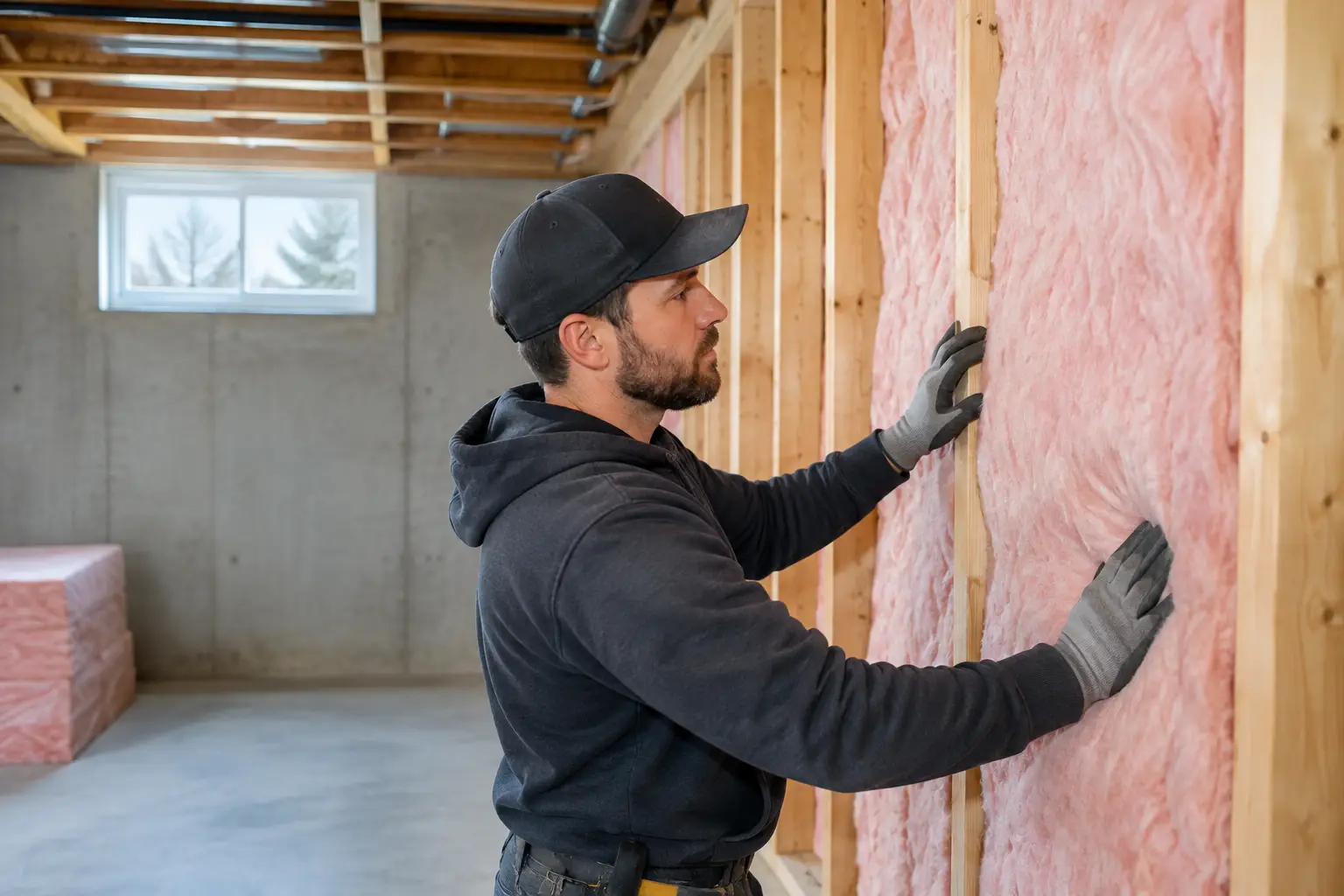
Best Basement Insulation Options for Edmonton Homes
A basement can feel cold even when the furnace is working hard. The reason is often not the furnace at all - it is heat loss through bare concrete walls, air leakage around the rim joist, or insulation installed without a moisture plan. The best basement insulation options address all three concerns, helping create a space that is warmer, drier, and ready to finish properly.
For Edmonton-area homes, insulation choices need to stand up to long heating seasons and the realities of below-grade concrete. The right system depends on whether the basement has moisture issues, whether walls are being finished, and how much space can be given up to framing and insulation.
Start With Moisture, Not Insulation
Concrete foundation walls are durable, but they are not dry by default. They can hold moisture from the surrounding soil and allow water vapor to move through the assembly. If water is entering through cracks, poor grading, failed window wells, or drainage problems, adding insulation over the issue can hide damage rather than solve it.
Before insulating, look for damp spots, white mineral deposits, moldy odors, peeling paint, and signs of water at the base of the wall. Repair active leaks, direct roof runoff away from the foundation, and correct exterior drainage where needed. A dehumidifier can improve seasonal humidity, but it is not a substitute for fixing a water problem.
Once the wall is dry and stable, the insulation system should limit warm indoor air from reaching cold concrete. That is the key to reducing condensation behind finished basement walls.
Best Basement Insulation Options Compared
There is no single material that suits every basement. The best choice comes down to moisture resistance, air sealing, available depth, budget, and the intended use of the room.
Rigid Foam Board Against Concrete
Rigid foam board is one of the most reliable choices for interior basement walls. Expanded polystyrene (EPS) and extruded polystyrene (XPS) can be installed directly against concrete, creating a thermal break between the cold wall and the finished space. When seams, edges, and penetrations are sealed carefully, rigid foam also helps control air movement.
EPS is often a practical value choice and is available in products rated for below-grade use. XPS offers good moisture resistance and compressive strength, although product characteristics and environmental impacts vary by manufacturer. In a basement renovation, foam thickness should be selected to provide meaningful insulation value, not simply the thinnest panel that fits behind a wall.
A framed wall can be built in front of the foam, leaving room for electrical work and drywall. Mineral wool can then be added between studs if more insulation value is needed. This approach takes up some floor area, but it provides a solid, serviceable wall assembly for a finished basement.
Closed-Cell Spray Foam
Closed-cell spray foam provides insulation, air sealing, and moisture resistance in one application. It adheres directly to concrete, irregular stone foundations, rim joists, and hard-to-reach framing areas. It is especially useful where the wall surface is uneven or where there is limited room for a separate air barrier.
The main trade-off is cost. Spray foam is usually more expensive than foam board and requires experienced installation. Thickness also matters: a very thin application may seal air leaks but will not provide the same thermal performance as a properly designed insulation layer.
For homeowners planning a high-performance finished basement, closed-cell spray foam can be an excellent option when installed as part of a complete moisture and finishing plan. It must also be covered with an approved thermal barrier, typically drywall, when required by local code.
Mineral Wool With a Continuous Foam Layer
Mineral wool is noncombustible, resists moisture damage better than traditional fiberglass, and fits well between wood or steel studs. On its own, however, it should not be pressed directly against a concrete foundation wall. Indoor air can still reach the cold concrete behind it, creating conditions for condensation and hidden mold.
The stronger approach is continuous rigid foam or spray foam against the concrete, followed by a framed wall filled with mineral wool. The foam handles the thermal break and air control; the mineral wool adds insulation and sound control. This assembly works well for family rooms, bedrooms, and basement offices where comfort and quieter rooms matter.
Fiberglass Batts: Use With Caution
Fiberglass batts are familiar and inexpensive, but they are rarely the best standalone answer for basement walls. Fiberglass does not stop airflow, and it can lose performance if moisture reaches it. Installed directly against concrete or placed in a wall without a proper air and moisture-control layer, it can contribute to musty odors and mold problems.
Fiberglass can still have a role in a correctly designed framed wall, but it should not be the first layer against the foundation. In most basement renovations, mineral wool or a foam-and-framing system offers better long-term protection.
Do Not Forget the Rim Joist
The rim joist is the band of framing where the foundation meets the floor structure above. It is one of the most common sources of cold drafts in a basement. On a winter day, it is often easy to feel air movement around this area.
Closed-cell spray foam is a strong choice for rim joists because it seals gaps around framing, pipes, and wiring while adding insulation. Carefully cut rigid foam board with sealed edges can also work well. Whichever method is used, the goal is continuous coverage without leaving unsealed cracks around the perimeter.
A well-insulated wall with a leaky rim joist will still leave the basement feeling uncomfortable. This smaller area deserves the same attention to workmanship as the larger foundation walls.
Choosing an Insulation System for Your Plans
If the basement will remain unfinished, rigid foam or spray foam on foundation walls can improve comfort and reduce heat loss without the cost of full framing and drywall. Protection requirements still apply, so material selection should be coordinated with the local building code and the intended use of the space.
For a finished basement, a continuous foam layer against the concrete followed by a framed wall is often the most dependable approach. It creates room for electrical work, gives drywall a solid surface, and helps protect the finished wall from cold concrete. Adding mineral wool in the stud cavities can improve comfort further.
Older homes, stone foundations, or basements with limited headroom may need a more tailored solution. Uneven walls, low mechanical clearances, and signs of prior moisture all affect what can be installed properly. Saving an inch of wall depth is not a good trade if the assembly creates a condensation risk behind new finishes.
Details That Make Basement Insulation Work
Material matters, but installation details matter just as much. Gaps between foam boards, unsealed seams, poorly fitted insulation around pipes, and framing installed tight to damp concrete can undermine the entire project.
Avoid placing untreated wood directly against a foundation wall or slab where it can absorb moisture. Use appropriate materials at the bottom of framed walls, keep insulation continuous where possible, and plan electrical boxes and service penetrations before the wall is closed. Drywall repairs later are far simpler than opening a finished wall to correct a missed wire or air leak.
Vapor barriers also need careful thought. Basement assemblies are different from above-grade exterior walls, and adding polyethylene in the wrong location can trap moisture. The insulation approach, local code requirements, and condition of the foundation should guide that decision.
Invest in a Dry, Comfortable Basement
The best basement insulation is not simply the product with the highest R-value on the label. It is a properly built system that manages moisture, stops drafts, and supports the way the space will be used for years to come. For homeowners planning a basement renovation, experienced craftsmanship at this stage protects the comfort, durability, and value of every finish that follows.


Comments